How learning starts to stick
When learning doesn’t stick, it’s usually not because the content is weak. It’s because of how people experience it.
The material can be clear, well structured, and relevant. People engage with it, contribute to the discussion, and leave with a sense that something useful has happened. Then they return to their role and very little changes.
That gap isn’t unusual. It shows up across organisations, even when the content itself is strong.
Understanding something doesn’t mean it will be used
In many cases, the material itself isn’t the issue. Where the value really sits is what people are able to do with the new ideas and concepts afterwards.
According to research from the Association for Talent Development, only a small portion of training is consistently applied in practice, with estimates often suggesting that as much as 70%–80% doesn’t carry through into day-to-day work.
When learning stays at the level of information, it can make complete sense at the time. People follow it, agree with it, and can explain it back. Then they return to a familiar situation and respond in the same way they always have.
There’s often a gap between recognising an idea and knowing how to use it when it matters.
What actually carries through
What people take forward tends to come from how they’ve worked with the material.
A conversation they’ve been part of, where they’ve had to think something through in real time. A moment where they’ve paused and looked at a situation differently, rather than moving straight to an answer.
Those experiences shape how someone approaches similar situations later.
They might not remember the model or the wording. What stays is a shift in how they think, or how they respond when something familiar comes up again.
How the learning experience changes the outcome
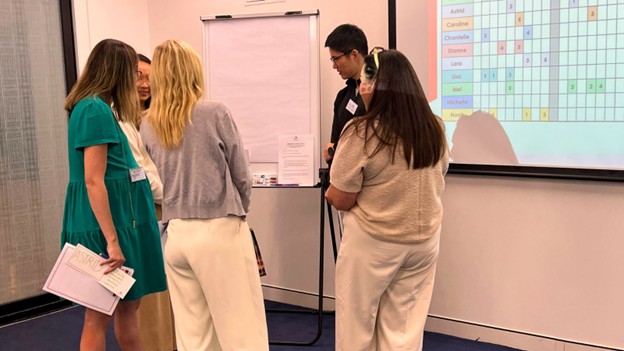
This is where the design of the session brings the content to life in participants day-to-day life long after the workshop or program is complete.
In practice, this often means working with real situations rather than hypothetical ones. Bringing current decisions or ongoing challenges into the room gives people something concrete to think through, rather than something to agree with in theory.
It can be as simple as asking people to bring a live issue into the discussion, and tabling it for different perspectives to surface.
It also means allowing space for thinking. Leaving a question open for a bit longer than feels comfortable, or asking someone to walk through how they would approach a situation before offering an alternative.
Small choices like these tend to shift how people engage. The conversation becomes less about getting through content and theories, and more about working through something that matters outside the workshop.
From the outside, this can feel less structured. In reality, it tends to make the work more relevant to what people are actually dealing with.
Where the shift shows up
The impact is rarely immediate.
You tend to see it later, in how someone approaches a conversation they would have handled differently before, or in how a decision is framed and worked through. It doesn’t always stand out as a direct result of the session.