
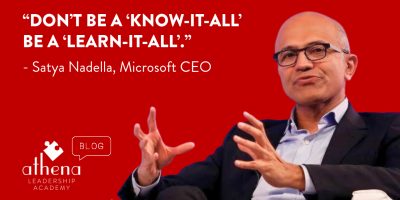
When Satya Nadella became Microsoft's CEO, he inherited an organisation known for internal competition. Its subsequent cultural transformation offers valuable insights into how employees learn the unwritten rules of success. Drawing on Microsoft's experience, Linda Murray explores how everyday behaviours and performance expectations shape team culture, and what leaders can do to recognise and change the habits that no longer serve their teams.

Research published in Harvard Business Review examines how sleep deprivation affects leaders and the workplace expectations that surround it. Drawing on a survey of 1,009 US managers and executives, this article explores why many leaders underestimate the effects of insufficient sleep, how exhaustion becomes associated with commitment and what organisations can learn from studies showing the impact of leadership support on recovery.

Delegation can be difficult for leaders who are used to staying close to every decision. Drawing on a real coaching experience, this article explores how holding on too tightly can create dependency, why delegation means transferring ownership rather than simply assigning tasks, and how giving team members room to make decisions helps build their confidence and judgement.

Leadership frameworks fade from memory, but a well-told story stays with people long after a workshop ends. Drawing on a conversation between IDEO U and storytelling consultant Catherine Connors, this article explores why experience-centred storytelling helps leaders bring people along, what makes a story worth telling, and why the stories people retell in their own words are often the ones that matter most.

The strongest leadership conversations don't end by chance. This article explores why intentional endings create ownership, momentum, and action, introducing Athena Leadership Academy's four-part framework to help people leave every meeting, workshop, or coaching conversation with one insight, one commitment, one action, and one conversation to have next.

AI was expected to make management easier, but for many managers it has added a new layer of responsibility. This article explores how AI is reshaping the manager's role, why leadership capability matters more than ever, and what organisations can do to prepare managers to lead people through change.