Why The Best Leadership Conversations Rarely Happen In The Boardroom
In the summer of 1994, while Toy Story was nearing completion, a small group from Pixar including John Lasseter, Andrew Stanton, Pete Docter, and Joe Ranft went out for lunch and started talking about what the studio should create next.
It wasn’t a formal strategy session. There was no workshop, no presentation deck, and no carefully structured agenda. Just a conversation around a table.
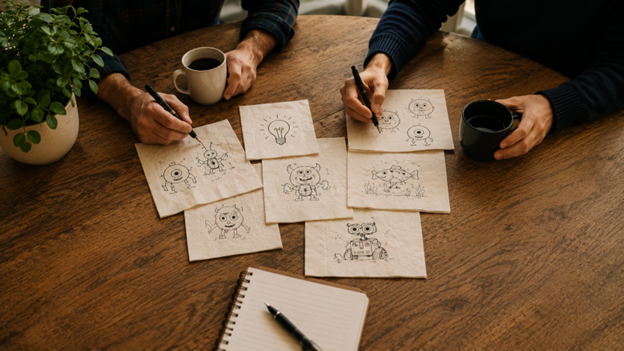
By the end of that lunch, the early ideas for A Bug’s Life, Monsters, Inc., Finding Nemo, and WALL-E had started taking shape on a series of napkins. Andrew Stanton later reflected that there was “something special” that happened whenever that particular group got together because they consistently brought out the best in each other’s thinking.
What’s always stood out to me about that story isn’t just the success that followed. It’s where the conversation happened.
Some of Pixar’s most influential ideas didn’t emerge from a formal boardroom discussion. They emerged in a more relaxed environment where people felt comfortable enough to think openly, challenge ideas naturally, and build on each other’s thinking without over-managing the conversation.
I think about that often when working with leadership teams because the same dynamic appears constantly in executive environments. One of the many reasons why I love what I do is because the most important conversations rarely happen during the weekly meetings and during BAU discussions. The strategy discussions might be productive and the meeting itself may be running well, but there’s an opportunity to lift the conversation. To be thinking at a level that the same-same situations don’t tend to create. People contribute thoughtfully, yet you can sense there are things sitting underneath the conversation that haven’t quite been said.
I keep noticing in executive offsites and leadership programs that the conversations are different to the ones leaders are having everyday. The candour is deeper, the honesty and vulnerability is higher. Even during a break between sessions or while walking back from coffee, the conversation are different, almost without anyone noticing.
Someone admits they’re unsure about a decision the team is making. Another leader quietly acknowledges they’ve been thinking the same thing for weeks. Suddenly, the discussion becomes more honest, useful, and productive than anything that happened formally around the boardroom table.
Why some conversations happen more naturally outside the usual meeting rooms
There’s something about stepping away from the formal environment that changes how people communicate. The conversation becomes less rehearsed, people stop focusing so heavily on saying the “right” thing and thoughts become less polished, but often more useful.
I’ve seen executive teams spend hours formally discussing an issue, only for the real conversation to happen ten minutes later over coffee. Someone says what they were hesitant to say earlier, or someone asks the question the group had quietly been circling around all day. And often, the response from the rest of the team is immediate relief because other people had been thinking it too.
That’s part of the reason informal conversations matter so much in leadership environments. They create space for people to think out loud rather than simply present finished thoughts.
What leaders tend to remember most
Most leaders won’t remember every slide from an offsite six months later … in fact, I’d question if they actually remember any! What they tend to remember are the conversations that felt real. The discussion that created clarity. The moment someone articulated an issue the team had been struggling to name. Those moments stay with people because they create understanding and connection, not just information.
The Pixar story is a good reminder that meaningful ideas and conversations don’t always emerge from highly structured environments. Sometimes people think more openly when the pressure of the formal room lifts slightly.
That doesn’t make formal meetings less important. Of course, structure, strategy, and clear decision-making are still essential in leadership teams. But some conversations need room to breathe before people feel comfortable enough to fully engage in them.
Why this matters for leadership teams
Leadership today often feels fast and highly operational. Meetings are full, agendas are tight, and teams move quickly from one decision to the next. In environments like that, it becomes easy to prioritise efficiency over genuine dialogue. But leadership teams still need space to think together properly.
The strongest leadership teams I work with intentionally create room for conversations outside the formal agenda because they understand that trust, alignment, and perspective often develop in the moments around the meeting, not just during it. And sometimes the conversation that changes everything begins while walking back from coffee rather than sitting around the boardroom table.
So perhaps there’s something worth paying attention to in that. The next time your team is together, step outside the meeting room for a while. Go for a walk. Continue the conversation over coffee. Create space where people can think a little more openly and speak a little more honestly.
You may find the most valuable part of the discussion happens once the formal meeting ends.